


The concept of 风水 Feng shui or literally “wind and water” is a multifaceted spatial and spiritual practice in China, with a deep history. The term ‘Feng Shui’ was “first mentioned in the ‘Zang Jing’ (The Book of Burial), written during The Eastern Jin Dynasty (317–420 AD), but records of its practice go back further in time.”1 The practice is most intensely practiced in southern China, including in Hong Kong, where top feng shui masters can command high fees to advise clients on all matters of personal life in order to bring wealth, happiness, and health. Feng Shui has often been dismissed as superstition. During the Cultural Revolution (1966–1976), the practice was explicitly targeted as part of the campaign against the “Four Olds” (old customs, old culture, old habits, old ideas). Geomancers were denounced alongside fortune tellers, lineage elders, and temple custodians—not because they were harmless, but because they were seen as competing authorities over land, ancestry, and moral order. In many rural areas, burial sites aligned according to geomantic principles were destroyed or forcibly relocated, often flattening ancestral graves that had been carefully sited along mountain ridges or watercourses. These acts were not only anti-religious but anti-lineage and anti-territorial, severing spatial ties that grounded local authority outside the socialist state. As Tristan Brown argues in Laws of the Land, feng shui has long operated less as belief than as law, governance, and political reasoning, shaping how land was regulated, how disputes were adjudicated, and how authority over territory was legitimized. 2
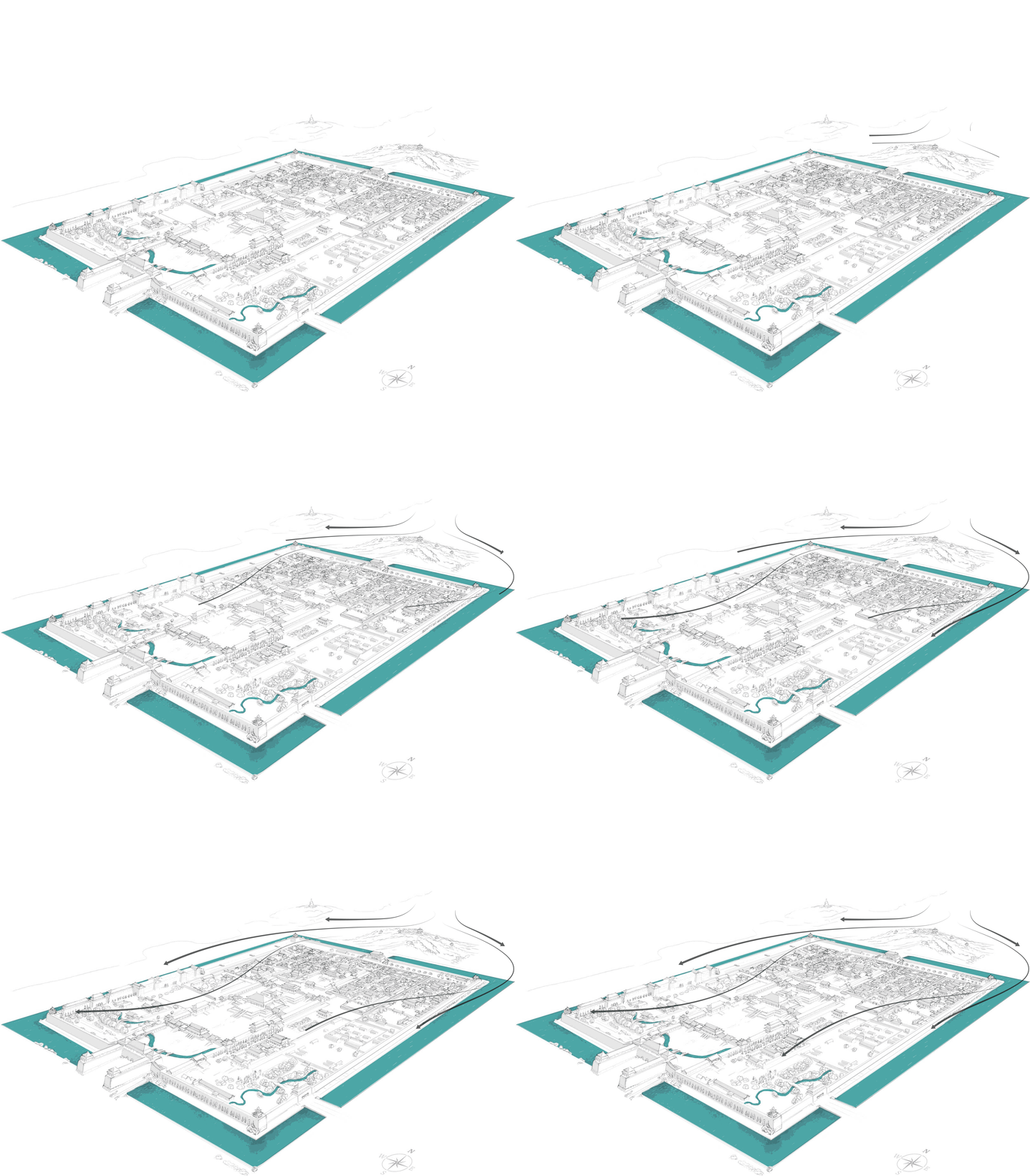
This post does not examine feng shui as a private or popular practice, although it certainly continues in this aspect, particularly in Hong Kong, southern China, and overseas Chinese communities in Southeast Asia. Instead, here I trace its evolution into a state-led logic of legitimation, visible in large-scale planning and environmental enforcement—from the siting and design of Shenzhen’s Futian CBD, Guangzhou’s Baiyun District, Xi’an’s Qinling villa scandal, and the Xiong’an New Area. Xi Jinping himself is said to be a believer in the power of feng shui. Thus, the concept persists not as mysticism, but as a durable grammar through which the Chinese state organizes space, nature, and power. Far from vanishing under socialism or technocratic planning, feng shui was absorbed and rearticulated, translated into the language of ecology, environmental protection, and spatial order. The malleability and variety of concepts in feng shui lends itself to serve as a convenient vocabulary of legitimation for state projects.
To be sure, the officially sanctioned feng shui is a watered down and simplified version. On the one hand, the state has tried to limit supposedly superstitious practices like feng shui—that contradict the CCP’s official Marxist non-religious position. Many officials targeted in Xi’s endless anti-corruption crusade have been cited as having practiced too much feng shui. Former security minister Zhou Yongkang 周永康, one of Xi’s earliest and most important targets, was alleged to have consulted advice from a qigong master, who was one of those who testified against Zhou in court. In 2021, tourism minister Li Jinzao was sacked, and one of the charges against him included carrying out “superstitious activities.” Former Hebei party secretary Zhou Benshun was also sacked and investigated for “seeking the protection of supernatural beings.”3 On the other hand, Xi himself has made protection and promotion of “excellent Chinese traditional culture” 优秀传统文化 as a form of legitimacy. This party-sanctioned version of feng shui dispences with superstitious aspects of fortune telling and emphasizes basic principles of city and regional planning—orienting buildings and new districts in relation to important mountains or “dragon veins,” and with water to the south, and following grid-like planning. Many traditional Chinese capitals, from Chang’an to Ming Beijing, were laid out according to these principles. New urban districts in recent years have also been planned according to principles of feng shui.
Shenzhen Futian CBD
Shenzhen was China’s first urban experiment of reform and opening up. In 1979, Deng Xiaoping 邓小平 tasked Yuan Geng, a director of Hong-Kong based red enterprise China Merchants to develop a new industrial zone in 蛇口 Shekou, just across the water from Hong Kong. Shekou was an experiment in granting autonomy to capital, allowing limited foreign investment, and even saw short-lived experiments in local newspapers and self governance. Shenzhen’s success was not assured in its early years, and was only concretized after Deng’s famous Southern Tour in 1992 when he visited the city again to signal his support for the city.4 Shenzhen developed through a series of enclaves parceled out to various state-owned enterprises—China Merchants 招商局, China Southern Petroleom 南油, Overseas Chinese Town 华侨城, and various manufacturing SOEs in the Huaqiang Bei 华强北 area. 5 In the 1980s the city began planning a new CBD that would create a more formal city center in what had hitherto been a sprawling decentralized growth pattern across the various zones.
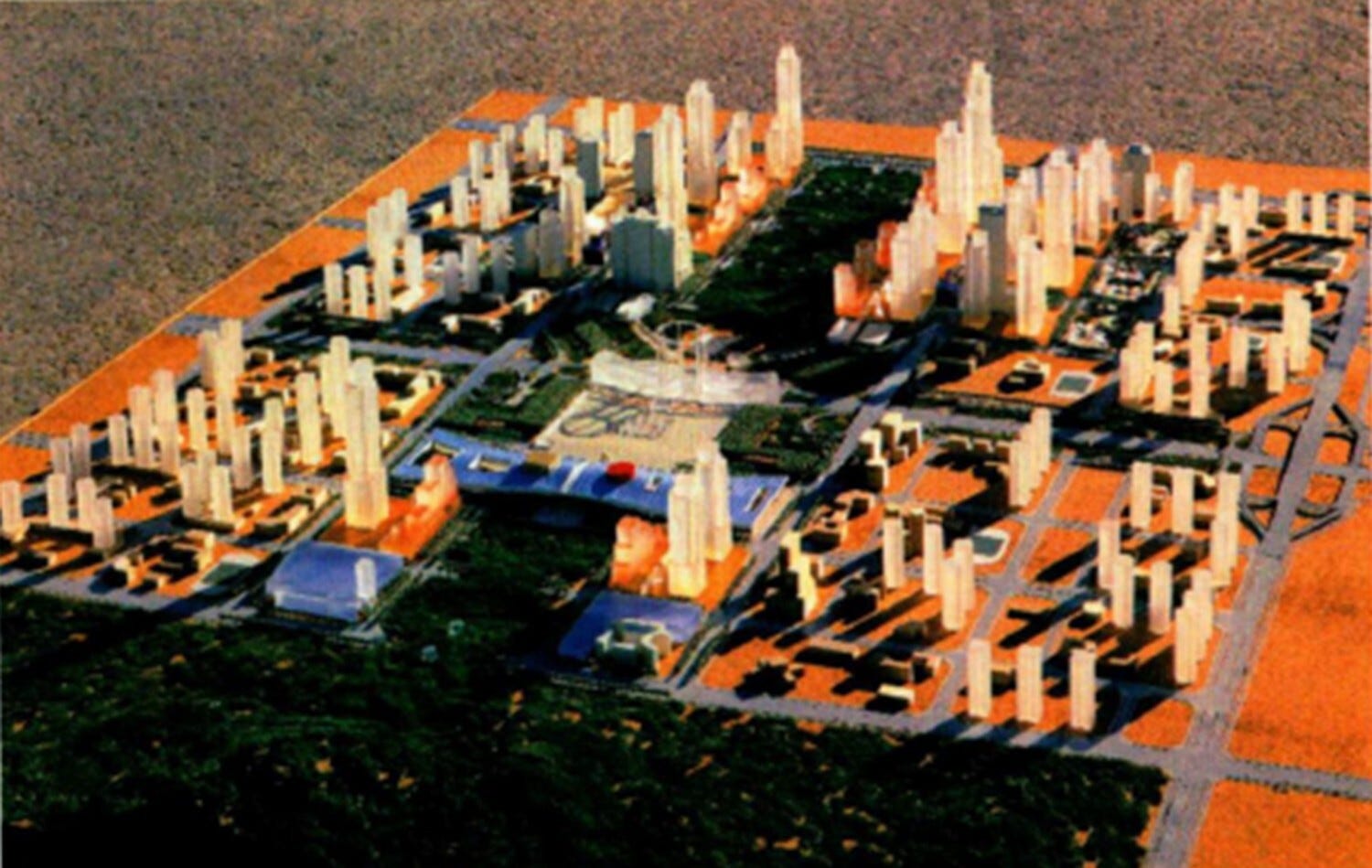
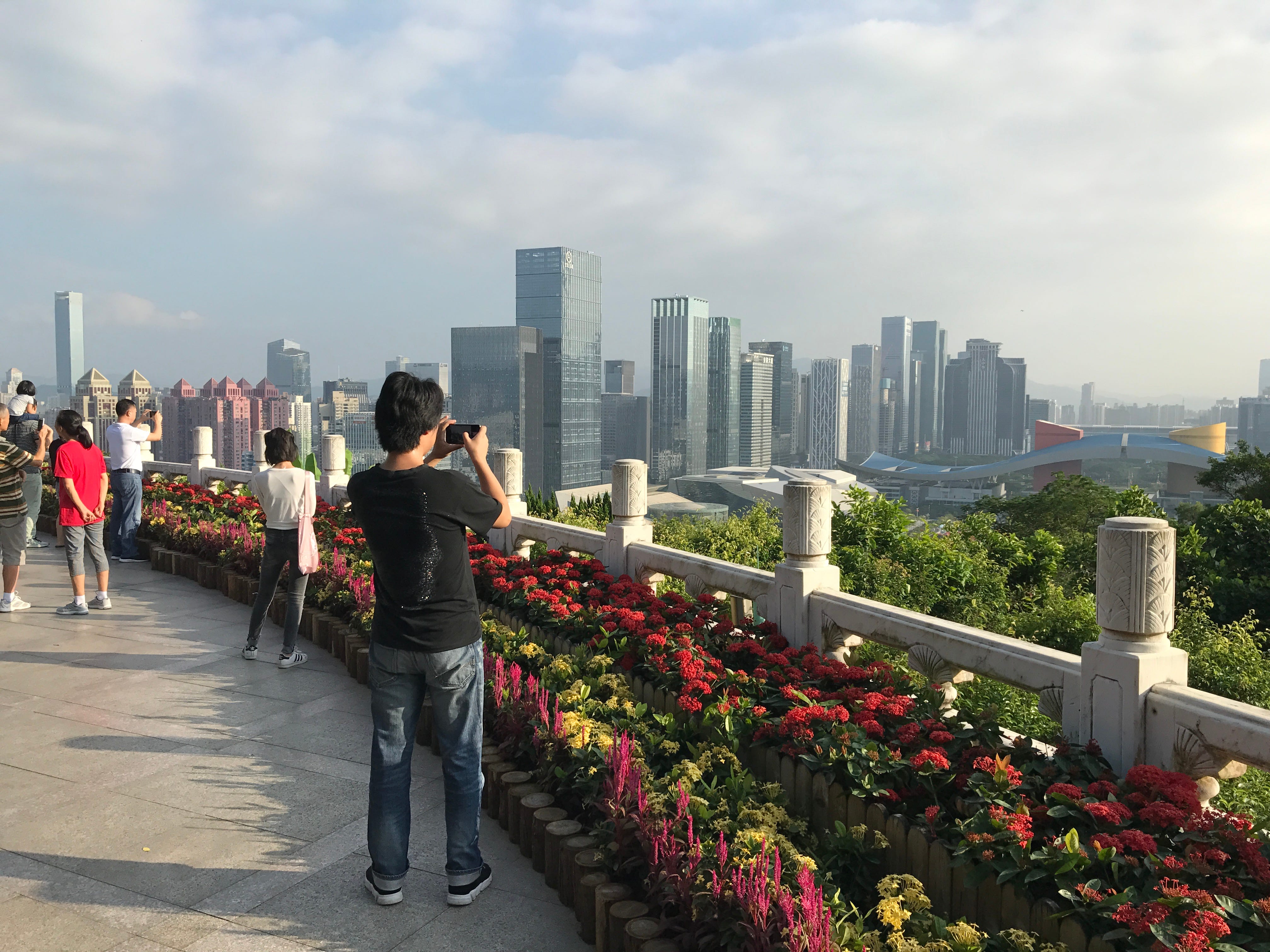
The Futian CBD project created a formal, orthogonal grid of 9 square blocks (echoing the well-field system or the ritual urban plan proscribed in the kao gong ji), aligned to the cardinal directions with a central axis aligned to the hills of Lianhuashan Park. A public open space spine runs along the central axis, underneath a sweeping curved structure that From a platform atop the park, a statue of the city’s patron saint Deng Xiaoping gazes out over the skyline below. Whereas Shenzhen began its growth in a relatively decentralized unplanned way, the Futian CBD was about installing a more formally designed administrative district, symbolizing greater power of the local government over the city, which had formerly been driven by enclaves controlled by various SOEs.


Guangzhou Baiyun District
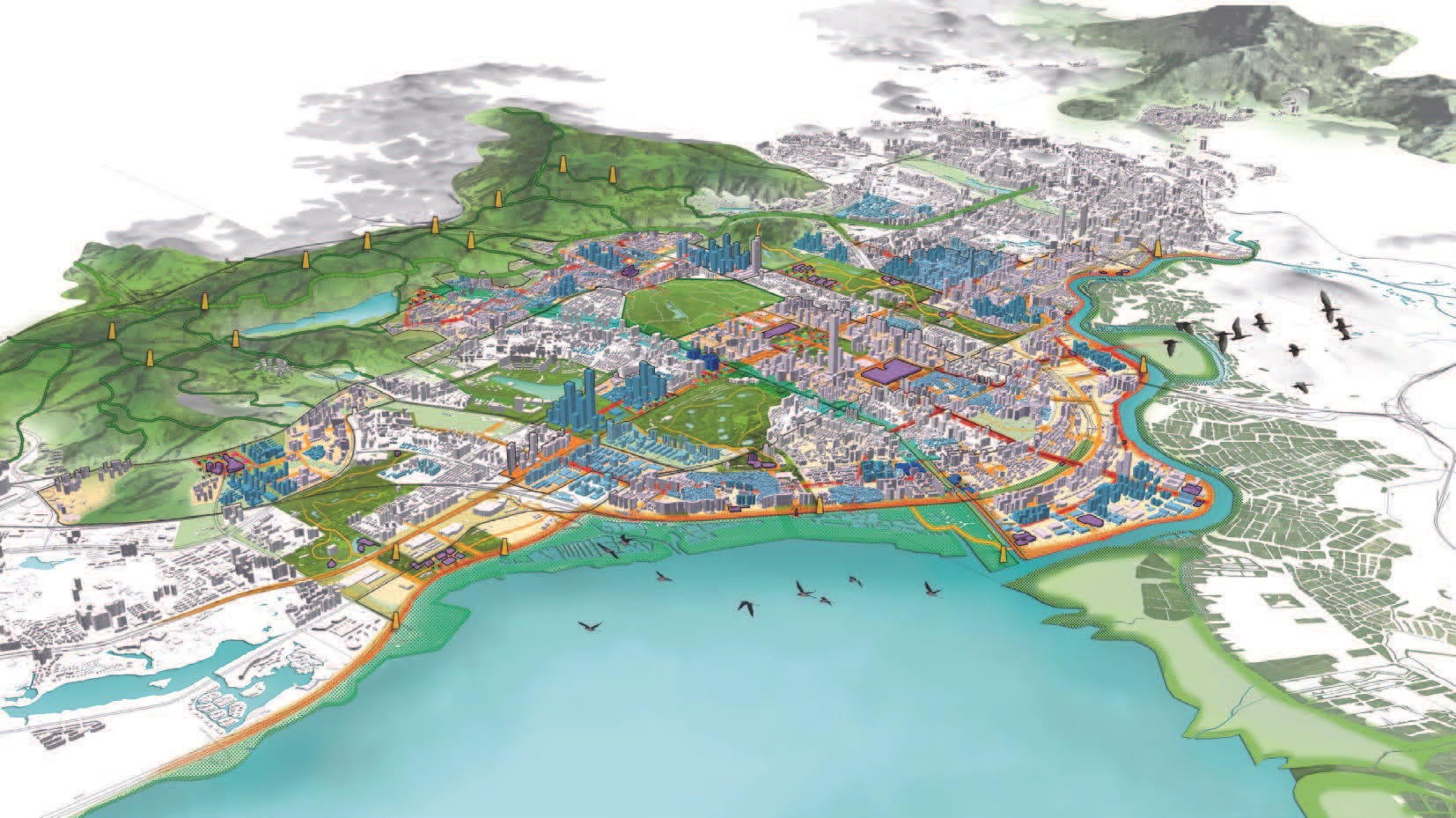
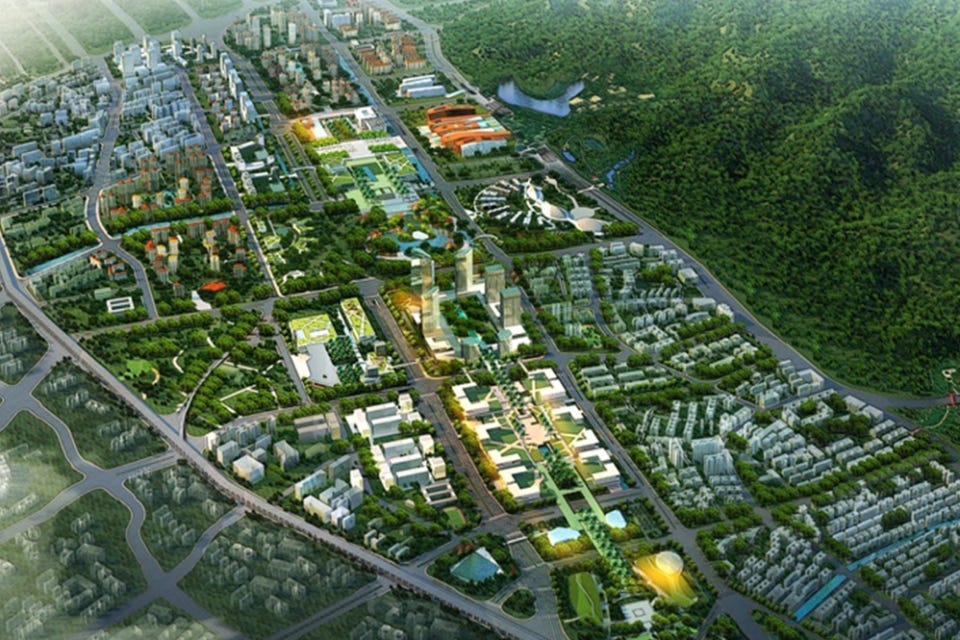
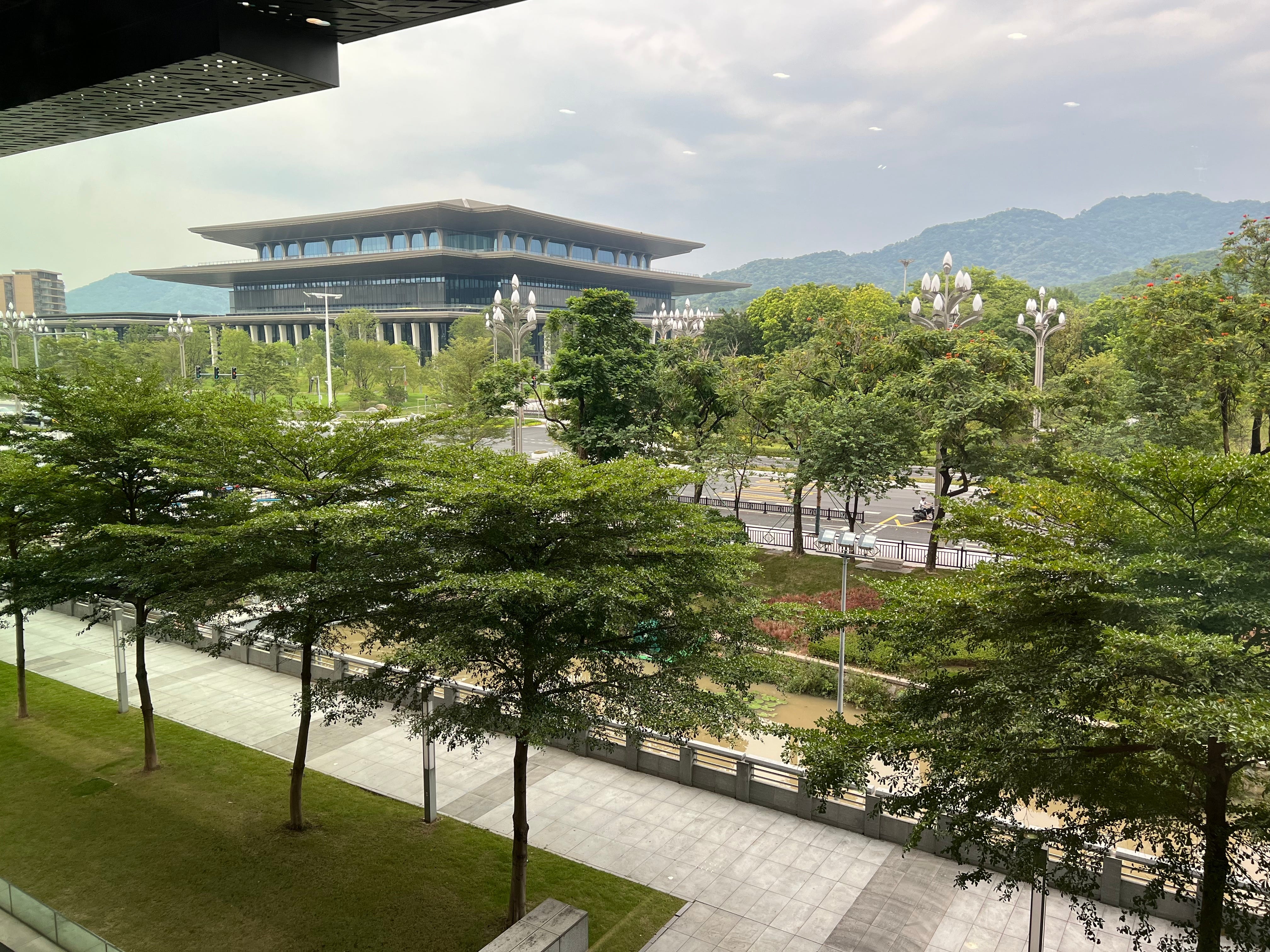
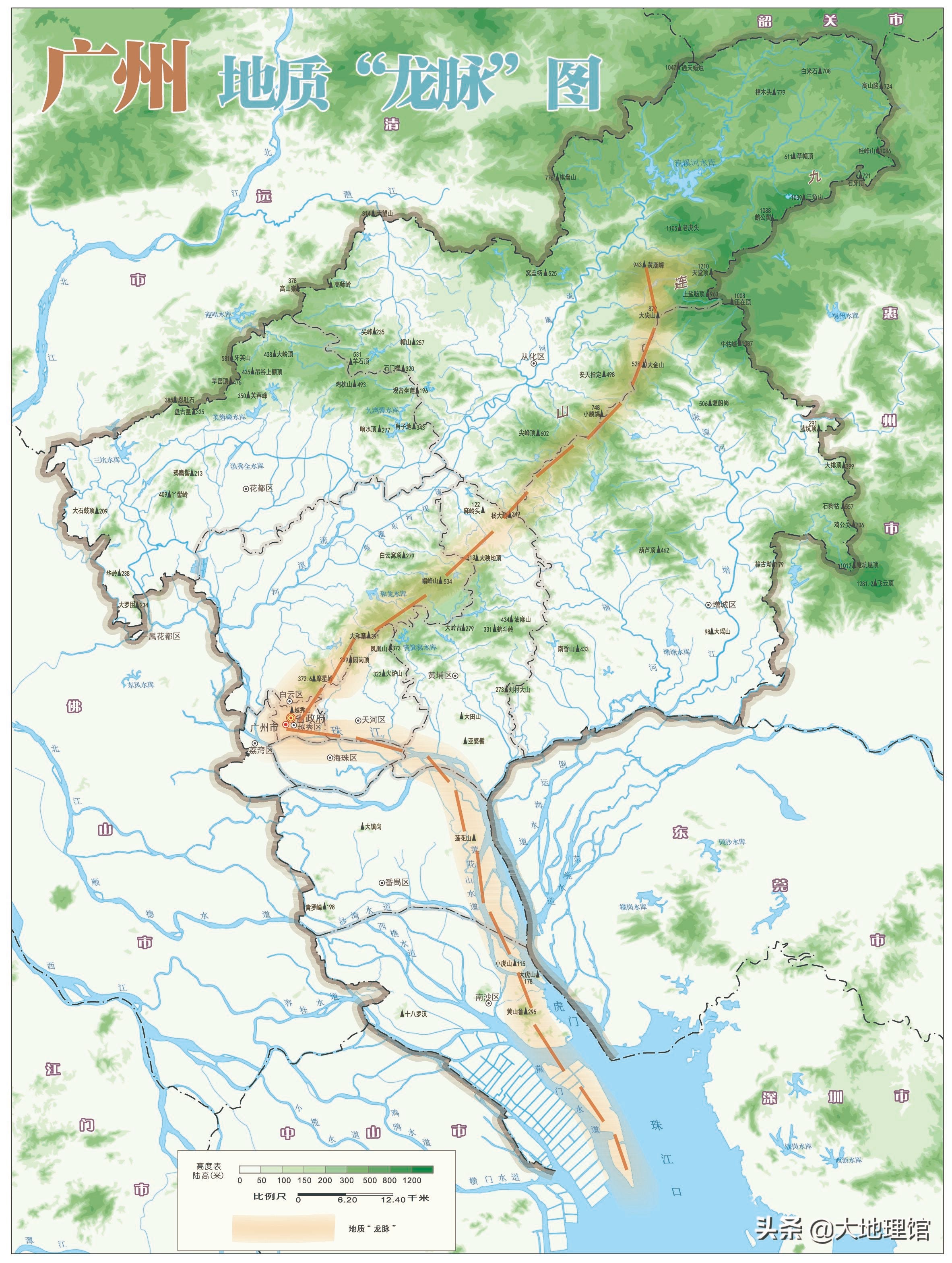
Guangzhou, the ancient capital of Guangdong province and one of China’s largest cities, is thought to have excellent feng shui. A mountain range runs from the northern part of the province down into the city proper, forming a ridge against which the city is nestled, and to the south of the city is the Pearl River 珠江. The city has since expanded in every direction, including to the south bank of the river. The Baiyun District stretches north-south, paralleling the ridge of the Baiyun mountains, which are being conserved as an ecological spine for the city.
Xiong’an New Area
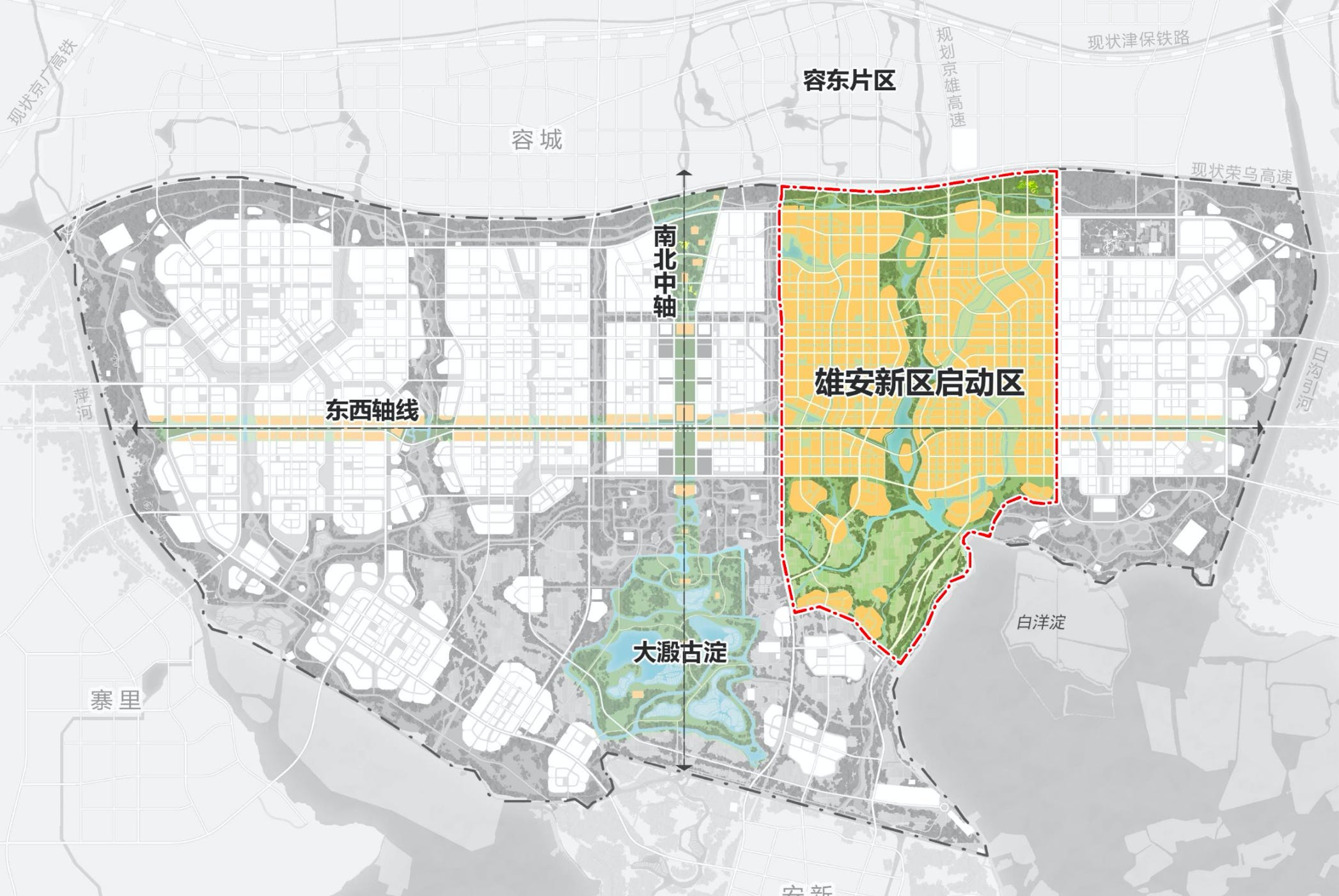
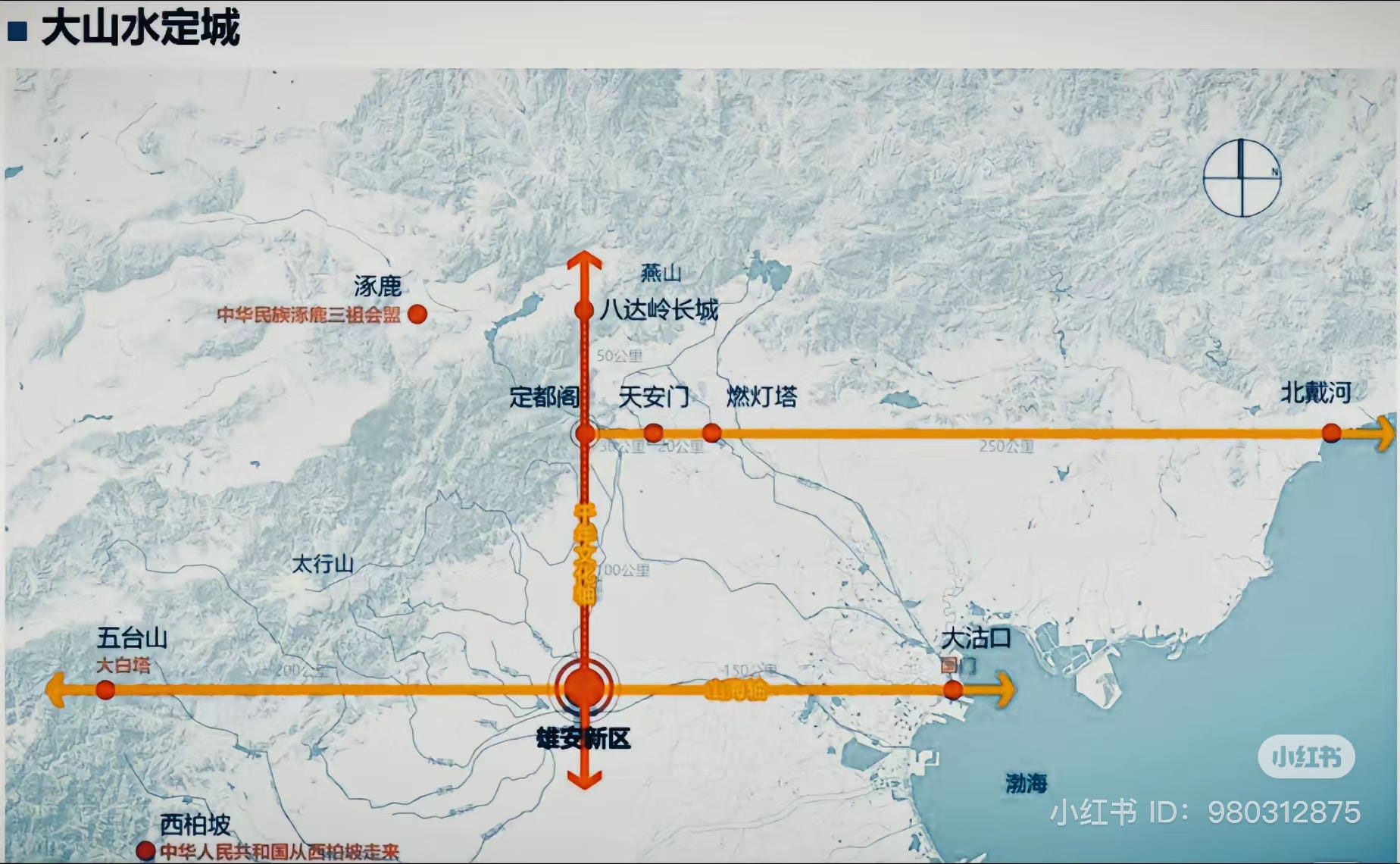
In 2017, Xiong’an New Area was announced as a new area 100 km southwest of Beijing to relocate “non-capital functions” from the congested crowded Northern Capital. Xiong’an is a signature project of Xi Jinping, and has taken on symbolic importance as a reflection of the changes Xi wishes to see in Chinese urbanization. The city is low-lying, integrated with a waterway system, and strongly aligned along central axes—both East-West main transport corridor, and a central North-South spine of Open Space. The main commercial district (Qidong District) is located to the East of the central axis—just as Beijing’s Guomao is directly East of Tiananmen Square on Chang’an Avenue. Tang Dynasty Chang’an also placed the main markets at equidistant locations from the central axis—the layout reinforce a core dynamic of Confucian hierarchy that the state is superior to commerce, and merchants at the lowest rung of society.
Xiong’an is located directly north of Baiyangdian—so with water to its south this might seem like ideal feng shui. But if we zoom out, the area where the city is being built is extremely low-lying, 8 or 9 meters below the long-term flood line. According to traditional feng shui principles, cities are sited on higher elevation. This is practical as well as spiritual—water flows out of the city, reducing flood risk. So to make Xiong’an safe, an enormous investment in new infrastructures are being built to prevent flooding—a ring levee system designed to prevent 200-yr floods, new sluice gates and pump stations, and new forest parks designed to absorb potential floods.
Xu Kuangdi, former Mayor of Shanghai who in 2014 was appointed to lead the advisory panel for the Coordinated Development of Jing-Jin-Ji, had elsewhere portrayed the choice of location as a simple matter of rational scientific planning also noted that, “traditional Chinese culture has the idea of mountains to position city location. Directly south of Beijing’s central axis is Bazhou, but the geological condition there was not suitable for a new city. The three counties chosen for Xiong’an are relatively sparse in population and lie directly south of Tanzhe Temple. This is an ancient temple with origins as far as back as the Western Jin Dynasty (307 AD). “Before there was Beijing there was Tanzhe Temple 潭柘寺. Relying on this axis, Xiong’an was selected” (Zeng, 2017). 6Aligning the city’s central axis with the temple can be said to endow the city with a degree of protection and stability. Given the controversy surrounding Xiong’an’s low-lying location, principles of feng shui offered a convenient post-facto rationalization.
Xi’an Qinling Villas and National Archives Project
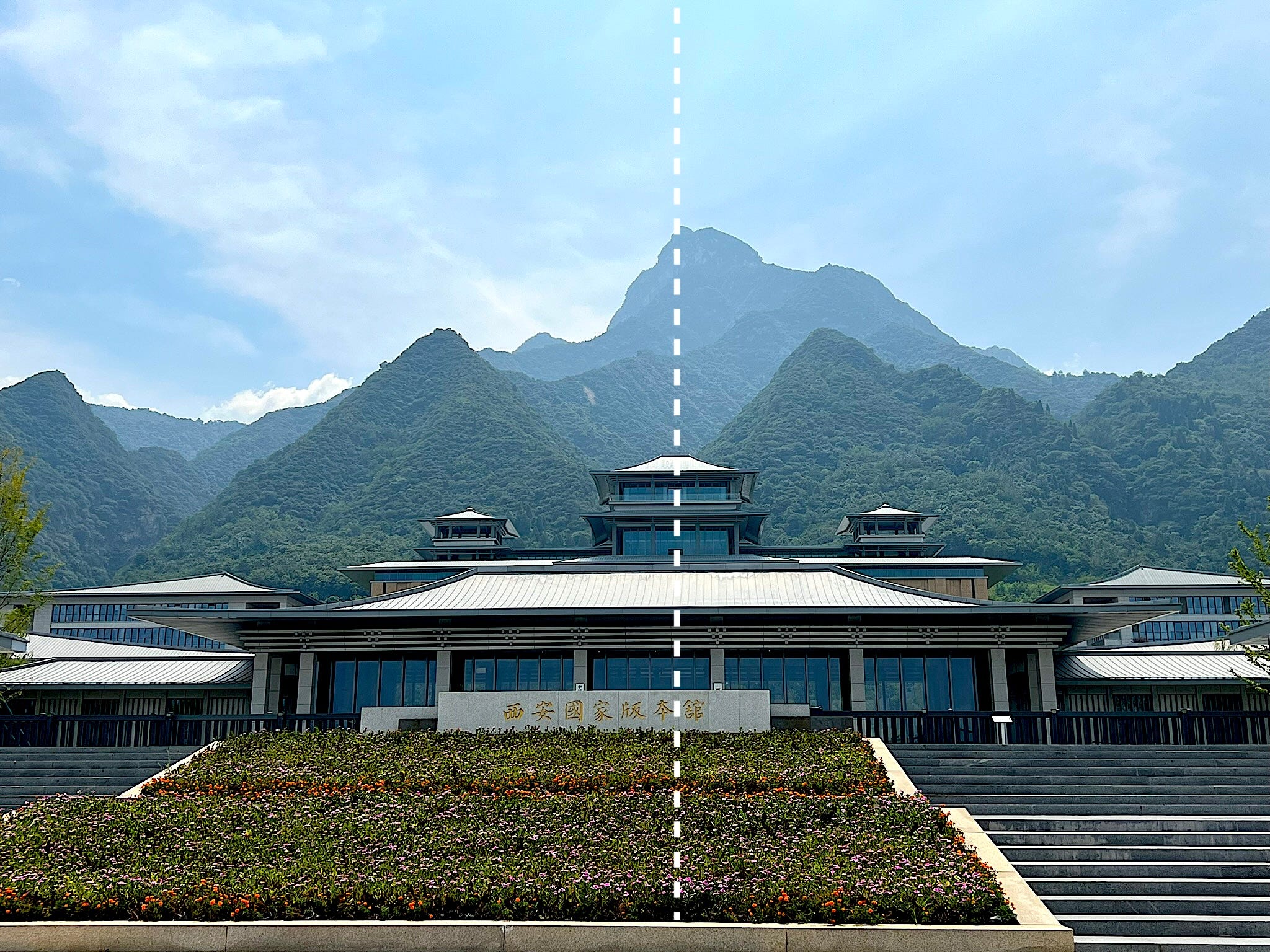
The Xi’an branch of the National Archives of Publications and Culture is located right up against the Qinling mountains, which separate North and South China, and have been a home for Daoist mystics and recluses for centuries. The Xi’an Branch was designed by well-known Xi’an architect Zhang Jinqiu 张锦秋, who has designed numerous cultural buildings in the city such as the Sha’anxi Provincial Museum 陕西省博物馆. The location of the Xi’an branch is interesting—note in the below image the central axis of the archive is aligned with the mountain peak behind it—a so-called “dragon’s vein” or longmai, in the traditions of Feng Shui.
The area is also perhaps not coincidentally where illegal villas were demolished in a 2016 scandal that brought down much of Xi’an and Sha’anxi province’s top leadership. The“Qinling Ecological Environment Protection Regulations” were issued in 2008. However, since 2003, developers have continued to build villas on the northern foothills of the Qinling Mountain. Xi Jinping, when visiting the area remarked, “let this be a warning that cadres must always protect the Qinling mountains.” The location of the archives built nearby these demolished villas, an investigation personally overseen by Xi, is yet another reminder of the power of the central state to safeguard the nation’s environment over the commercial interests of local officials. The construction of the new archives branch, known to be a personal project of Xi’s, was a symbolic statement of the central state’s role in guarding China’s natural environment such as the dragon veins of the Qinling mountains. Xi visited Qinling again in January of this year to emphasize value of ecological conservation and guard against illegal construction.7
Madeddu, Manuela, and Xiaoqing Zhang. “Harmonious Spaces: The Influence of Feng Shui on Urban Form and Design.” Journal of Urban Design 22, no. 6 (2017): 709–25. https://doi.org/10.1080/13574809.2017.1336061.
Brown, Tristan G. Laws of the Land: Fengshui and the State in Qing Dynasty China. Princeton University Press, 2023.

Chatwin, Jonathan. The Southern Tour: Deng Xiaoping and the Fight for China’s Future. Bloomsbury Academic, 2024.
Chen, Ting. A State Beyond the State: Shenzhen and the Transformation of Urban China. Nai010 publishers, 2017.
https://www.beijing.gov.cn/renwen/bjgk/mtggk/mtgwl/202304/t20230410_2994438.html
https://www.scmp.com/news/china/politics/article/3340163/why-chinas-xi-jinping-putting-political-heat-back-illegal-villas-and-resorts